
The Bible does not begin with a hero. It begins with light, water, land, and sky. It begins with stars, oceans, trees, fruit, and living creatures. The world is built in layers, day after day, like a house being prepared for someone important. Then, near the end of creation, God does something different.
He forms a man.
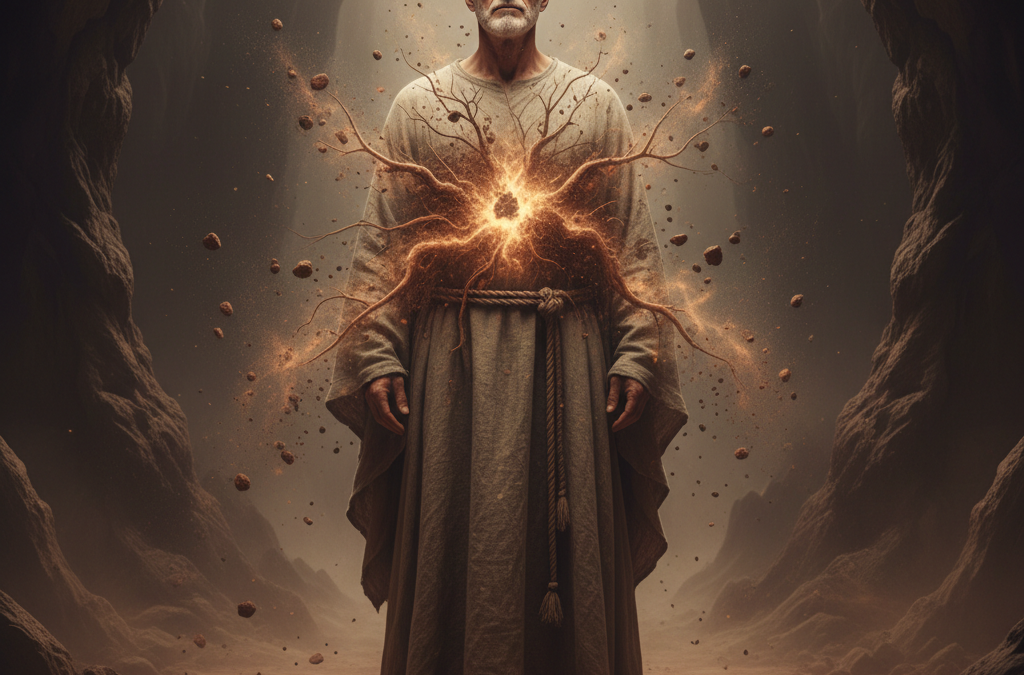
Genesis tells us that the Lord formed Adam from the dust of the ground and breathed into his nostrils the breath of life. Adam did not fall from the sky. He was not carved from gold. He was not born from the blood of a slain god, as many ancient myths describe. He was shaped from dirt, and yet that dirt was crowned with glory.
This is where the story becomes unlike any other. In many myths, the first man is an afterthought. The gods grow tired of work and create humans to serve them. In other stories, the first man is half divine, born from violence or rivalry in the heavens. Genesis gives us something stranger and greater. The first man is dust, and he is beloved. He is low, and he is lifted. He is not divine, but he is made in the image of God.
That phrase should be noted. To be made in God’s image means Adam was created to reflect God in the world. He was not God, and he was never meant to be. He did not share God’s power, perfection, or eternity. But he was given a role no other creature had. He was called to make the invisible God visible through his life.
The sun shows God’s power. The mountains show His strength. The seas show His depth. But Adam was meant to show His character. In Adam, creation could begin to see what its Maker is like.
This is True Fantasy in its purest form. The unseen King creates a living image to walk in His world. The invisible Author steps close and shapes a character who can speak with Him, hear Him, and represent Him. It sounds like myth, but the Bible presents it as history. The supernatural is not an escape from reality. It is the foundation of reality.
Adam’s dignity begins with his origin. God forms him with care. The language in Genesis is personal. God breathes into him, and the man becomes a living being. Breath is life, and Adam lives because God gives him life. No other creature is described this way.
Adam stands between heaven and earth. He is made from dust, yet filled with divine breath. He belongs to the ground, yet he can speak with God. He is earthly and elevated at the same time, and that tension helps us understand who he is. Adam is not an animal that slowly climbed upward. He is not a god who fell downward. He is a creature who was lifted. His greatness is not found in what he is made from, but in who made him and why.
God places Adam in a garden. This is not wild, empty land. It is planted, ordered, and beautiful. The garden is more than scenery. It is a sacred place where God walks and speaks. Adam is placed there “to work it and keep it,” words that later describe the work of priests who serve in the tabernacle. This means Adam’s work is not punishment. It is worship. He is called to tend holy ground.
Before sin entered the world, work was joy, and responsibility was an honor. Adam was given dominion over the animals, not as a tyrant, but as a steward. He names them, and in the ancient world, naming was an act of authority. Adam is entrusted with rule, but not with independence. He rules under God.
This is another way the Genesis story is unique. In other ancient cultures, kings were called the image of a god. Only rulers carried that title. Genesis gives it to Adam, and through Adam to all humanity. The first man is royal, but he is not divine. He is placed second only to God, yet he remains fully dependent on God.
Why did God create Adam near the end of creation week? Because the world was being prepared for him. Light, land, plants, sun, moon, stars, fish, birds, and animals were all arranged before Adam ever opened his eyes. The house was furnished before the son arrived. God did not rush His creation. He built the stage, then placed His image-bearer upon it.
Adam stands at the high point of creation week. The pattern of “Let there be” slows down, and God speaks differently: “Let us make man in our image.” There is counsel, intention, and weight in those words. The story pauses before it moves forward because Adam matters. He carries the story forward.
Doctrinally, Adam is not only the first man. He is the head of humanity. Later Scripture presents him as the one through whom sin and death entered the world. Paul writes, “As in Adam all die.” Adam is a representative, which means what he does affects everyone who comes after him.
Before the fall, that representative role was pure and bright. Adam stood for humanity in obedience. He received God’s command. He was given access to the tree of life and warned about the tree of the knowledge of good and evil. He was trusted with moral choice, a charge no animal was given.
Adam’s importance is not only theological. It is also literary. He stands at the beginning of a story that moves toward redemption. He is a pattern that points forward. Later, the Bible calls Jesus the “last Adam.” The first man failed, but the second would succeed. The garden would echo in another garden. The tree in Eden would echo in the tree of the cross.
Without Adam, the gospel makes no sense. Without the first man, the second Adam has no context.
But Adam’s importance is also personal. He shows us what a man was meant to be before fear, shame, and pride entered the world. He was strong without being cruel. He was responsible without being anxious. He was close to God without trying to become God. He walked with the Creator and heard His voice. The supernatural was normal for him because there was no gap between heaven and earth.
This is why the story inspires confidence. If the first pages of Scripture show a God who forms, speaks, blesses, and walks with His creation, then reality is not cold or empty. It is personal. The foundation of the world is not chaos, but communion.
True Fantasy tells us the world is more than it appears. Genesis tells us it is more because God is near. Adam’s life before the fall reveals that God’s desire was not distance, but relationship. He did not create man to exploit him. He created man to reflect Him.
That means human identity is not self-made. It is received. It is grounded in divine intention. For men today, this matters deeply. You are not an accident of nature. You are not defined by your failures. You are not merely dust drifting through time. You were designed for responsibility, stewardship, and relationship with God. Even though sin has fractured that calling, the design still speaks.
Confidence does not come from pretending you are strong. It comes from knowing you were made by Someone strong, for a purpose that has not been erased.
For women, understanding Adam before the fall can also bring clarity. The drive in men to build, guard, name, and lead did not begin with culture. It began in the garden. When twisted by sin, that drive can become harsh, passive, selfish, or silent. But at its root, it was meant to reflect God’s care and strength.
Adam’s story is supernatural. It speaks of breath from heaven, a sacred garden, and the image of God walking in dust. It sounds like fantasy because it tells us the world is filled with God’s presence. Yet it also grounds us. It tells us who we are and why we matter.
The first man was not God. He was dirt made alive. But that dirt was shaped by divine hands and filled with divine breath. Adam stood beneath the sky as the visible sign that the invisible God delights to be known.
That is not small. That is the beginning of everything.
Adam before the fall shows us what is possible when dust trusts its Maker. Men can have confidence, not because they are flawless, but because they were formed with purpose. The God who breathed life into the first man has not withdrawn from His creation. He is still the Author of the story.
Women can understand men more clearly by seeing this original calling. Beneath confusion, weakness, pride, or silence is a design meant for stewardship and closeness with God.
True Fantasy says the world is not empty. It says the invisible King once walked in a garden with a man made from dust. If that is the beginning of our story, then our lives are not random. They are part of something larger, older, and more secure than we often dare to believe.
And that should give us courage.
Keep reading: Chapter 12: The Crown Jewel of Creation