

Why You Need True Fantasy
There are seasons when life feels like a constant recovery. You wake up intending to move forward, yet by the end of the day you are reacting instead of leading. Conversations catch you off guard. Emotions rise before your thoughts can steady them. Decisions feel rushed, or delayed, or second‑guessed long after they are made. You may be capable, responsible, and sincere, yet there is a quiet sense that you are always adjusting instead of advancing.
That feeling wears on a person. It creates a low-grade exhaustion. You begin to wonder whether the problem is simply the pace of modern life, or whether something deeper is off. You read books, listen to podcasts, gather advice, and try new strategies. Some help for a while. But under pressure, the same patterns tend to return. It can feel like living in a subtle but constant disadvantage.
Centuries ago, the prophet Hosea spoke to a nation that looked stable on the surface but was drifting beneath it. Their economy functioned. Their routines continued. Yet something foundational was eroding. God’s diagnosis, delivered through Hosea, was surprisingly simple: “My people are destroyed for lack of knowledge.” The issue was not intelligence, resources, or effort. It was a deficit at the level of understanding reality itself.
That sentence may sound religious at first, but consider its structure. Destruction begins with a lack of knowledge. When what is most real is misunderstood or ignored, everything built on top of it begins to tilt. Orientation falters. Decisions follow that distortion. Actions then carry the consequences.
Hosea was not speaking merely about information. He was speaking about knowing God—about losing sight of the One who stands behind life itself. When that knowledge faded, the nation did not collapse overnight. It slowly lost its footing.
The pattern is recognizable. When our view of reality is thin, our lives feel unstable. When our interpretation of life is incomplete, our responses feel reactive. We may manage for a while on instinct or experience, but under pressure the gaps in our understanding begin to show. What we believe about reality—whether we have examined those beliefs or not—quietly shapes every decision we make.
A Winning Framework
An unexpected illustration of this principle comes from a very different arena.
Colonel John Boyd was a fighter pilot in the Korean War who later became an instructor in the United States Air Force. He developed a reputation that bordered on legendary. In training exercises, he would take younger pilots up to thirty thousand feet and allow them to begin in a position of advantage. Within forty seconds, he said, he would reverse the situation and place them at a disadvantage. If he failed, he would pay them one dollar for every second. He never had to pay.
Boyd was not known for extraordinary intellectual ability. His measured IQ was around 90, which falls below average. His success did not depend on superior brainpower. It depended on a framework. He developed what he called the OODA loop: Observe, Orient, Decide, Act. The pilot who could move through those stages more clearly and more quickly gained control of the engagement.
Observation meant taking in accurate information. Orientation meant interpreting that information correctly in light of training and reality. Decision flowed from orientation, and action followed decision. The key was not frantic movement. It was clarity. The pilot who understood what was actually happening beneath the visible maneuvers gained the advantage.
Boyd did not invent this pattern; he discovered it. Outcomes are shaped by what we see and how we interpret what we see. If observation is flawed or orientation is skewed, decisions and actions will drift off course.
The Bible describes a similar structure for life itself. Hosea’s warning reveals the same sequence. A lack of knowledge leads to instability. When we misunderstand or ignore what is ultimate, our orientation shifts. If there is a Creator and we live as though there is not, we will misread ourselves and our circumstances. If there is moral order woven into the fabric of reality and we treat life as morally neutral, our decisions will reflect that misreading.
From there, consequences unfold. Not always immediately, and not always dramatically, but steadily.
The biblical framework can be described in four movements: knowledge, understanding, wisdom, and action.
It begins with knowledge. If God is real, then reality does not begin with us. It begins with Him. He is not a supporting character in a human story; He is the Author of the story itself. If that is true, then knowing Him is not a religious accessory but a foundational necessity. Without that knowledge, we are attempting to interpret life while ignoring its primary source.
From knowledge grows understanding. Once we begin to grasp who God is—His authority, His justice, His mercy—we start to see ourselves differently. We are not self-created or self-sustaining. We are finite, dependent, and accountable. That realization can be unsettling at first, but it is also stabilizing. It relieves us of the burden of being ultimate. It anchors our identity in something larger and more durable than achievement, comparison, or approval.
Wisdom then follows. Wisdom is not mere intelligence. It is the ability to make decisions that align with reality. When knowledge and understanding are in place, choices become clearer. We are no longer reacting primarily to emotion or cultural pressure. We are responding to what is true.
Action is the visible expression of that alignment. It is the outward movement that flows from inward clarity.
Many of us attempt to reverse this order. We try to fix our actions without addressing our understanding. We work on decision-making techniques without asking whether our view of reality is accurate. We focus on what is immediately visible while neglecting the deeper framework that shapes every outcome.
In a dogfight, the pilot who reacts only to what flashes before his eyes will lose to the pilot who understands the unseen dynamics of speed, angle, and position. In life, the person who reacts only to circumstances will often feel perpetually behind. But the person who begins by asking, “What is ultimately real?” steps into a different posture.
This is where the Bible’s voice becomes both challenging and hopeful. Hosea’s words are not merely a warning; they are an invitation. If destruction begins with a lack of knowledge, restoration begins with its return. To know God is to step back into alignment with the structure He has woven into the world.
For those who already trust the Bible, this may sound familiar but freshly urgent. For those who are unsure what they believe, it may sound like a hypothesis worth examining. What if the instability we experience is not simply circumstantial? What if it is connected to how we are interpreting reality itself?
Colonel Boyd’s life reminds us that victory does not depend on exceptional intellect. It depends on moving through the right framework. In the same way, a steady life does not depend on being the smartest person in the room. It depends on beginning at the right starting point.
If God is real, then knowing Him is not an optional spiritual add-on. It is the first movement in a winning framework. From that knowledge grows understanding. From understanding grows wisdom. From wisdom flows action.
You may feel today as though you are always recovering ground. The invitation of Scripture is not to try harder at the action stage. It is to return to the beginning. Seek knowledge of the One who stands behind reality. Allow that knowledge to reshape how you see yourself and your world. As clarity deepens, decisions steady, and action follows with greater confidence.
The Invisible, once considered, may prove to be more foundational than you imagined. And when what is most real comes into view, the rest of life begins to find its proper place.
Knowledge, however, is only the beginning. Once we begin to see who God is and understand who we are in light of Him, the next step is learning how to live within that clarity. Wisdom is the practice of aligning decisions with what is true, and action is the steady movement that follows.
At Wisdom’s Edge, we will explore what it means to carry this knowledge and understanding into everyday choices—into conversations, responsibilities, conflicts, and callings. A framework only changes life when it moves from theory into motion. The goal is not simply to see clearly, but to live wisely.
Latest Musings and Insights
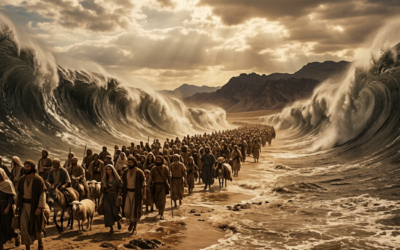
The Red Sea — Power Over Chaos, Trust for Each Day
Whenever floodwaters rise, we remember that water is not always peaceful. It can be beautiful in a glass, calming beside a shore, and life-giving in a field, but when it breaks its boundaries, it becomes terrifying. It can sweep away roads, homes, plans, and lives in...
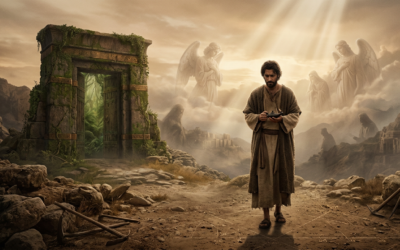
When the Invisible Died
The invisible died before the visible decayed. That is one of the hidden horrors of Genesis 3. When Adam and Eve ate from the tree, they did not fall dead beneath its branches. Their bodies did not stop breathing, and their minds did not go blank. They could still...
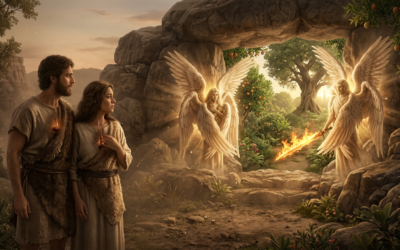
Afterword: What Died?
Genesis 3 is the chapter where death enters the story. We cannot finish this discussion without answering the most important question: What died? That is not a small thing. Up to this point, the world has been filled with life. Light breaks into darkness. Waters...
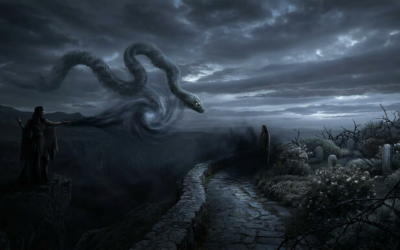
Depth That Leads to Destruction
Most people do not want a shallow life. They want meaning. They want depth. They want a faith that is real and thoughtful, not thin or borrowed. They want insight that helps them understand the world and their place in it. In every generation, there is a longing to...
Creator’s Echo: The Start of Culture
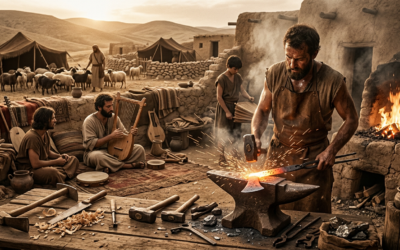
Genesis 4 is often remembered for violence. It tells the story of Cain and Abel, and later of Lamech’s pride and revenge. Yet tucked inside this chapter is something surprising. In the middle of a world already marked by sin, culture begins to bloom. Lamech had three...

The Formed Mind: How George MacDonald Taught C.S. Lewis to See
In 1853, a young Scottish minister named George MacDonald stood before his congregation and spoke of a God whose love was deeper and stronger than human rebellion. His words unsettled church leaders, and before long he was removed from his pulpit. His health was...

COMING SOON: True Fantasy Podcast
True Fantasy is coming—a new podcast hosted by Steve Kroening that invites listeners into a realm where fantasy is not escapism, but revelation. Each episode explores stories, symbols, and Scriptures that point to a reality far bigger than imagination—a world charged with meaning, wonder, and eternal truth. True Fantasy dives beneath the surface of culture, myth, and storytelling to uncover how God has woven His reality into every generation’s longing for something greater. Along the way, select episodes will feature special guests—visionary creators, thinkers, and storytellers—who bring thoughtful, Scripture‑rooted insights into both the Bible and the world we live in today. This is fantasy as it was always meant to be: true, vast, and alive.